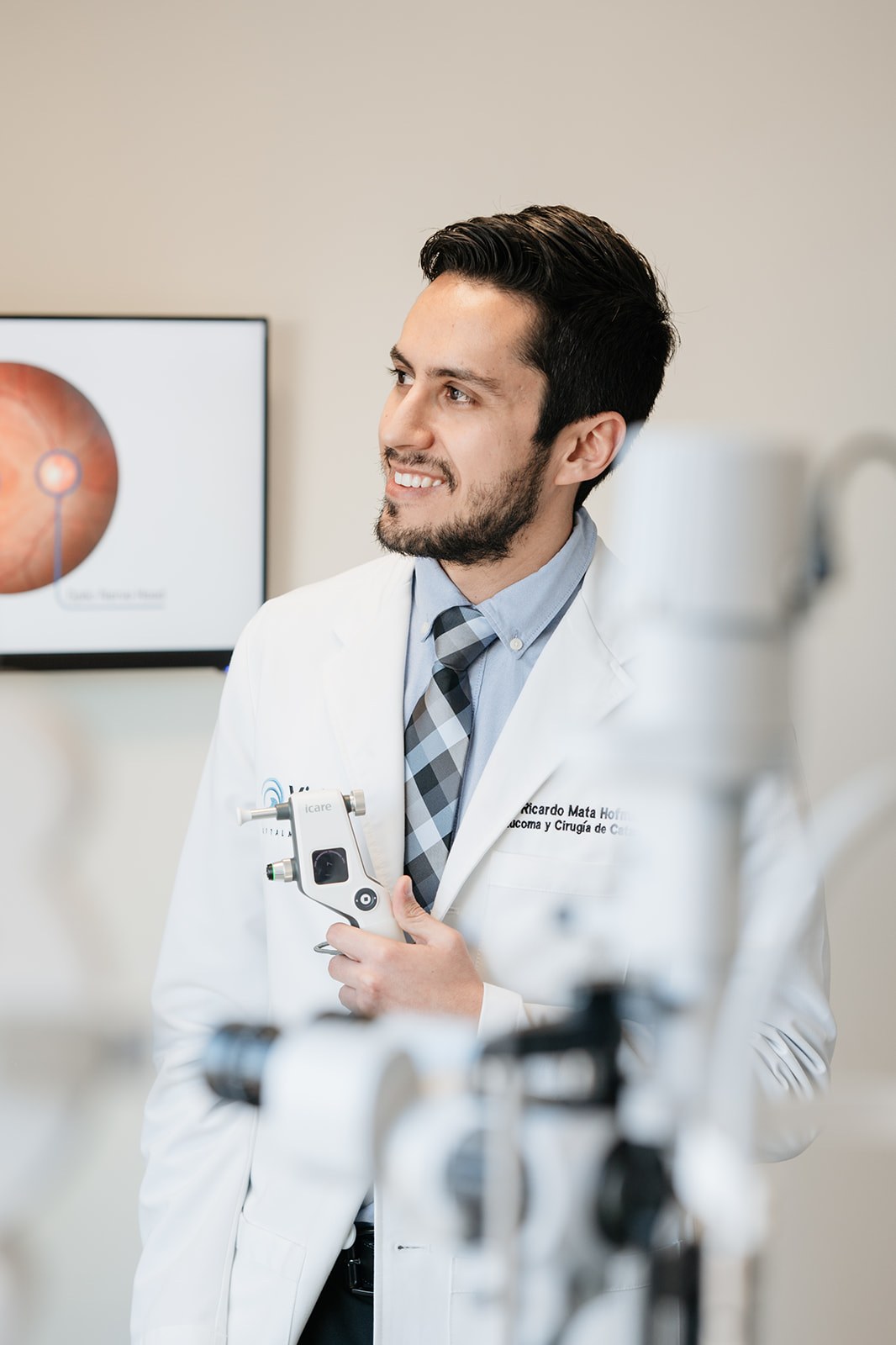
Glaucoma in Tijuana: the silent thief of sight

Last updated: August 2026
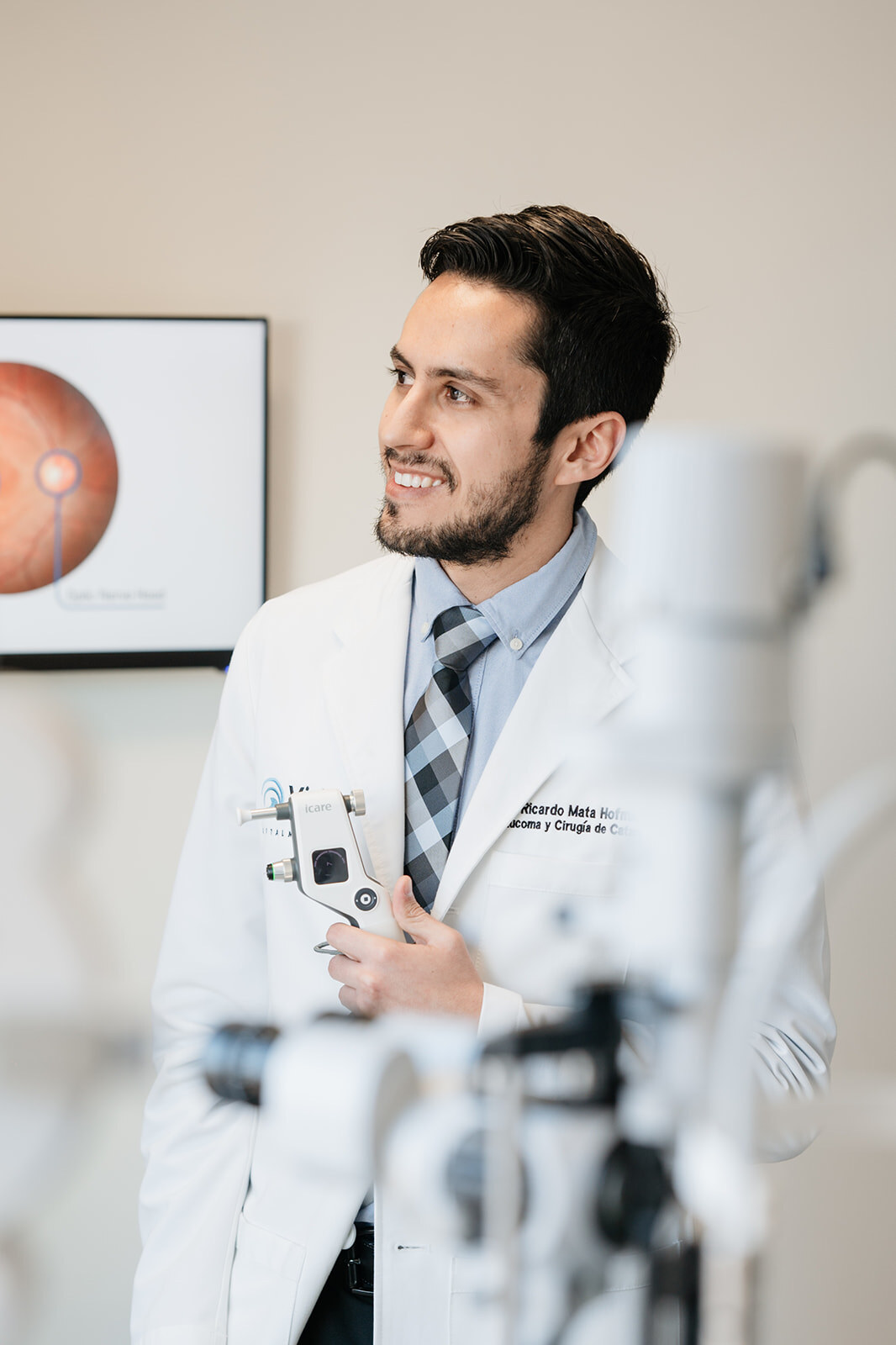
Glaucoma is one of the conditions I'm most passionate about treating, precisely because it tends to progress without obvious symptoms until advanced stages, when permanent optic nerve damage has already occurred —that's why it's known as the "silent thief of sight."
Why early detection makes the difference: as a glaucoma specialist, in my experience detecting it early significantly improves a patient's visual prognosis. Also, every case is different: we individualize the most appropriate treatment based on your type and stage of glaucoma —there's no one-size-fits-all protocol.
Here's how we detect glaucoma at Vision Clinic
A complete eye exam allows us to detect glaucoma before it causes visual field loss. We have specialized technology for this:
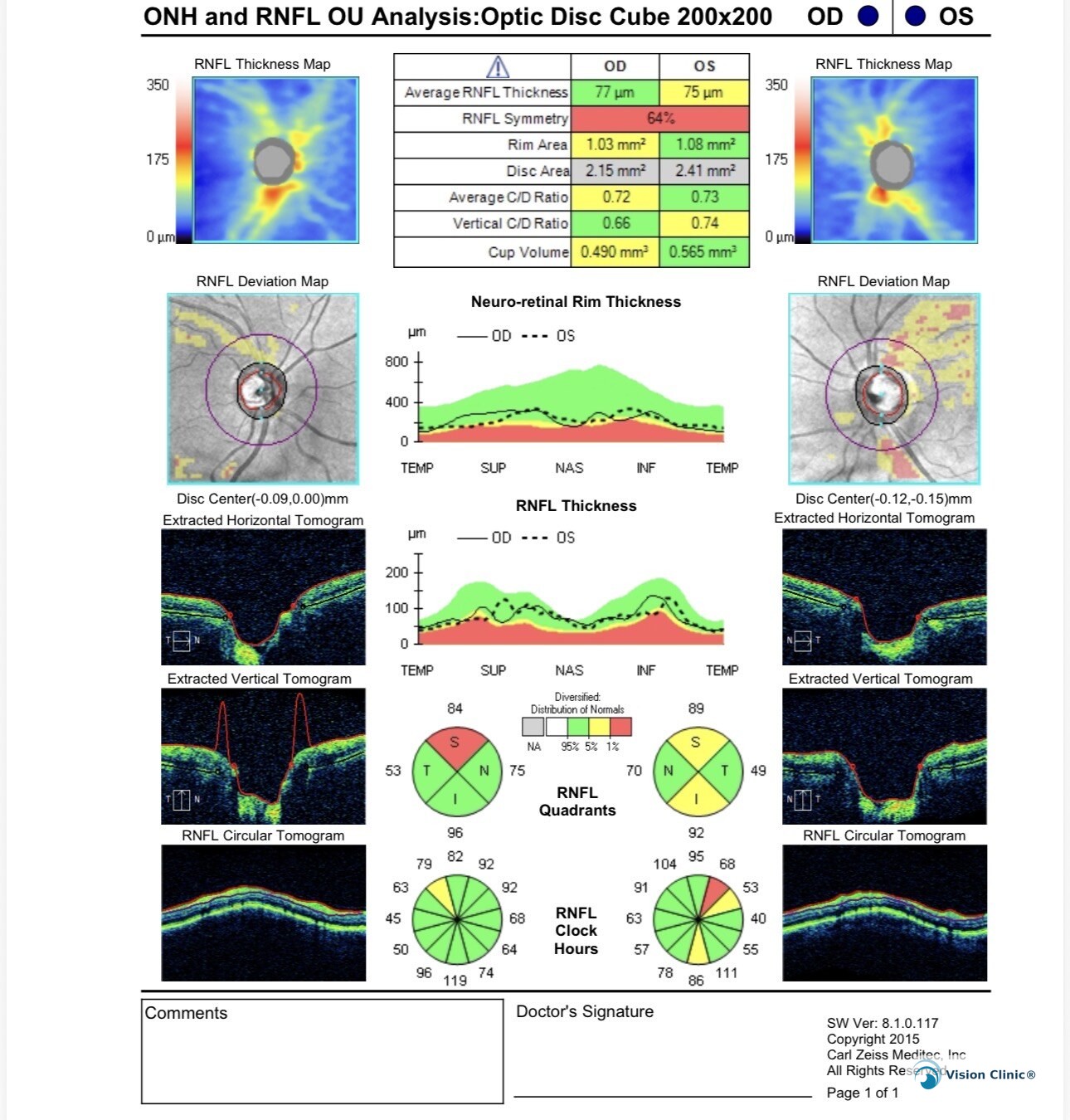
Optic nerve tomography (OCT)
Lets us see the optic nerve's structure layer by layer and measure your retinal ganglion cells —a layer with very good sensitivity and predictive value for detecting glaucoma, even before it shows up in your visual fields.
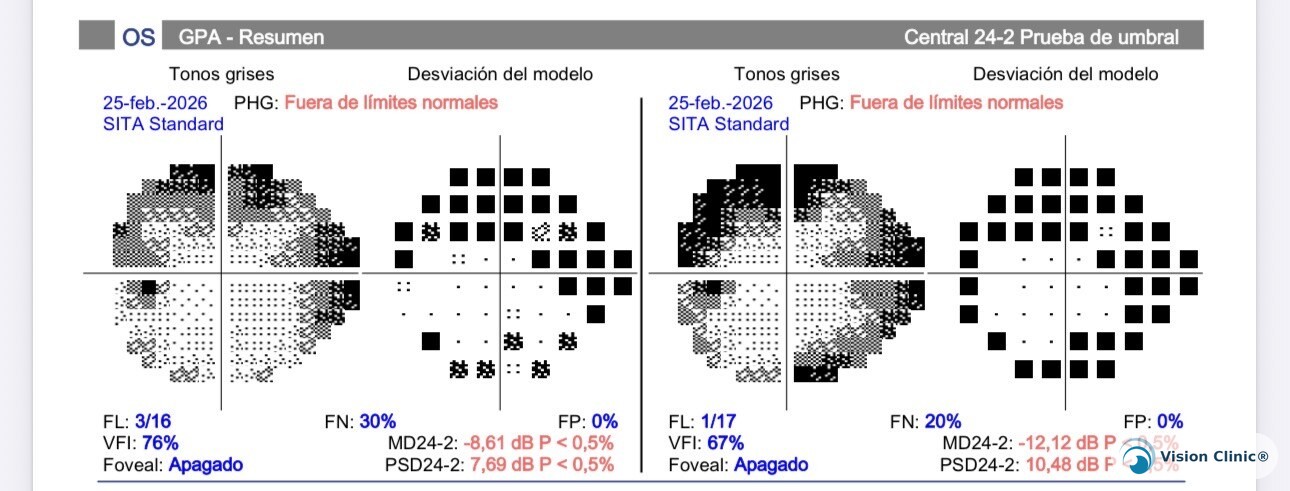
Visual fields
Measures how much —and in which areas— you've lost peripheral vision, key to knowing whether your glaucoma is progressing and how fast.
Intraocular pressure measurement
We have different technologies to measure it precisely: Goldmann tonometry (the reference standard) and iCare 200 (fast, with no need for anesthetic drops).
Treatment —drops, laser or surgery— aims to slow glaucoma's progression; vision already lost generally cannot be recovered, which is why periodic check-ups matter, especially with a family history.
If you have a family history of glaucoma, or haven't had your eye pressure checked in a while, I invite you to schedule your evaluation — the sooner we detect it, the better your prognosis will be.