Cataract surgery in Tijuana: when to operate and what to expect

Last updated: August 2026
Cataracts are one of those conditions where timing matters: the longer we let one progress, the harder it becomes —and a harder cataract makes surgery more complex and riskier. That's why I want to explain why it's not a good idea to "wait until it's ready," and how the process really works at Vision Clinic.
Don't wait for the cataract to "mature." It's a common belief that you should let a cataract progress before operating, but the harder it gets, the more energy and time the surgery requires, which increases the risk of complications. The sooner it's treated, the simpler and safer the surgery.
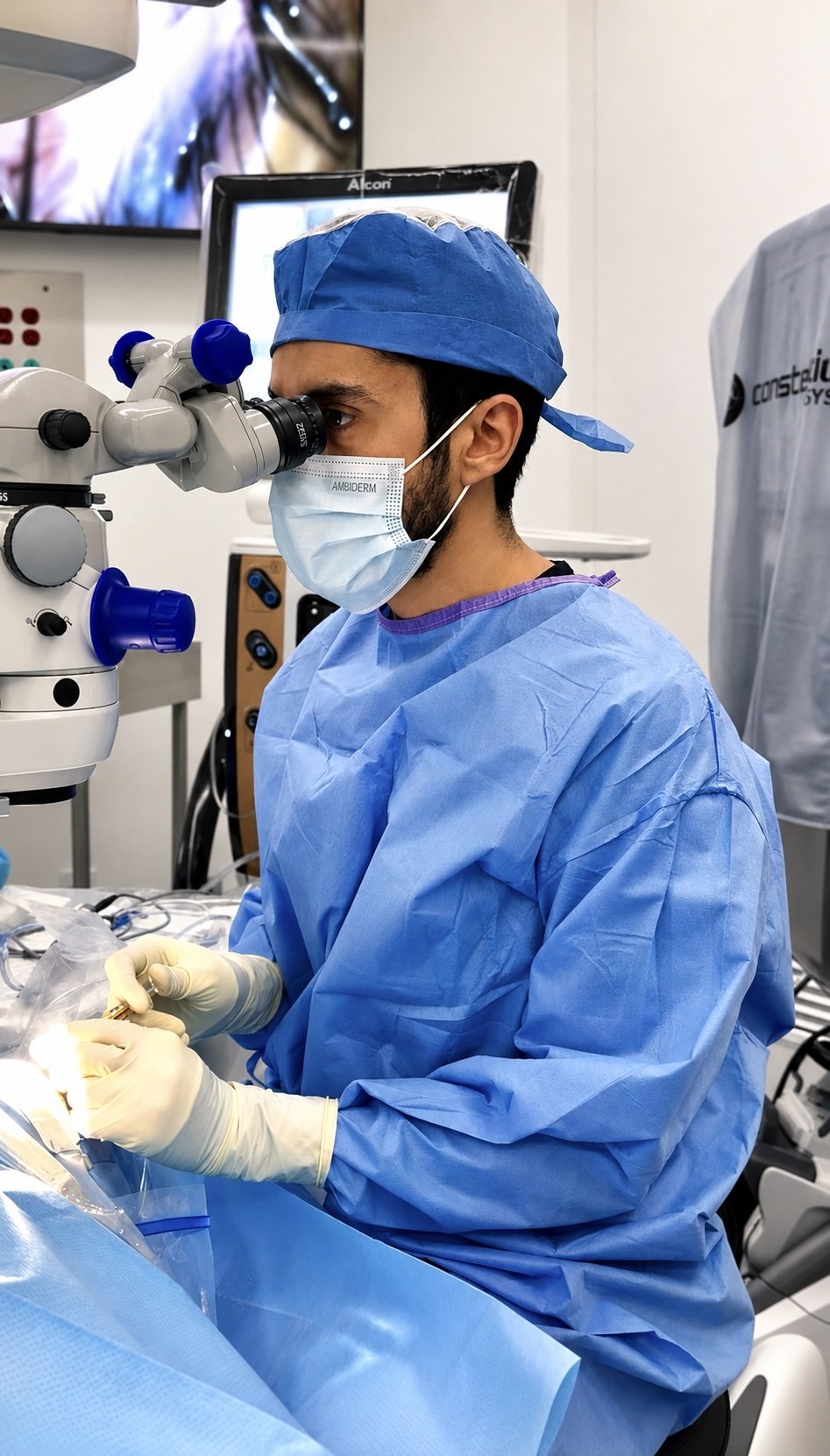
Here's the cataract surgery process at Vision Clinic
What to expect from surgery
In general, you'll notice a very significant visual improvement. Results can vary if there's another intraocular condition present, but in the vast majority of cases visual recovery is excellent. The intraocular lens we place is permanent —it lasts a lifetime— and is made of hydrophobic acrylic.
Types of intraocular lenses
The surgical technique is the same regardless of which lens you choose; what changes is the type of lens, based on your activities and needs:
- Monofocal: corrects vision at a single distance (usually far); it's the most traditional option.
- Monofocal Plus: slightly extends the focus range compared to a traditional monofocal, improving intermediate vision.
- Multifocal: allows good vision at far, intermediate and near distances, reducing dependence on glasses.
- EDOF (extended depth of focus): offers a continuous range of vision, ideal for those seeking less dependence on glasses with a lower risk of visual side effects than multifocal lenses.
At your consultation, I'll help you decide which one best fits your lifestyle.
If you've already noticed a change in your vision, don't wait: the sooner you're evaluated, the simpler your surgery and recovery will be.