
Types of cataract
Quick answer
Not all cataracts look or progress the same way: they're classified by which part of the lens is affected, and also by how advanced (dense) they are.

Not all cataracts look or progress the same way: they're classified by which part of the lens is affected, and also by how advanced (dense) they are. These photos, taken of real Vision Clinic patients during their slit-lamp exam, show different presentations.
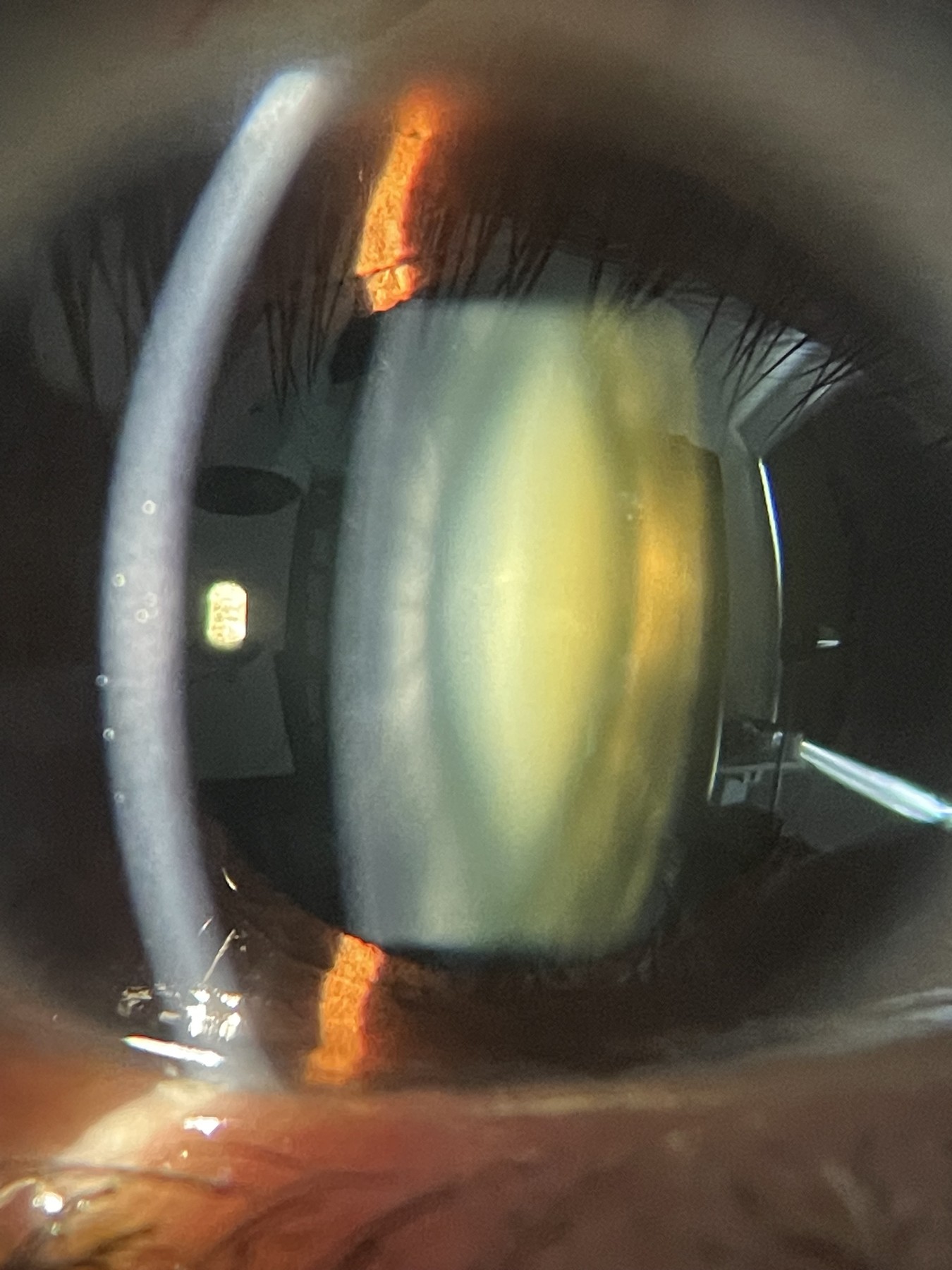
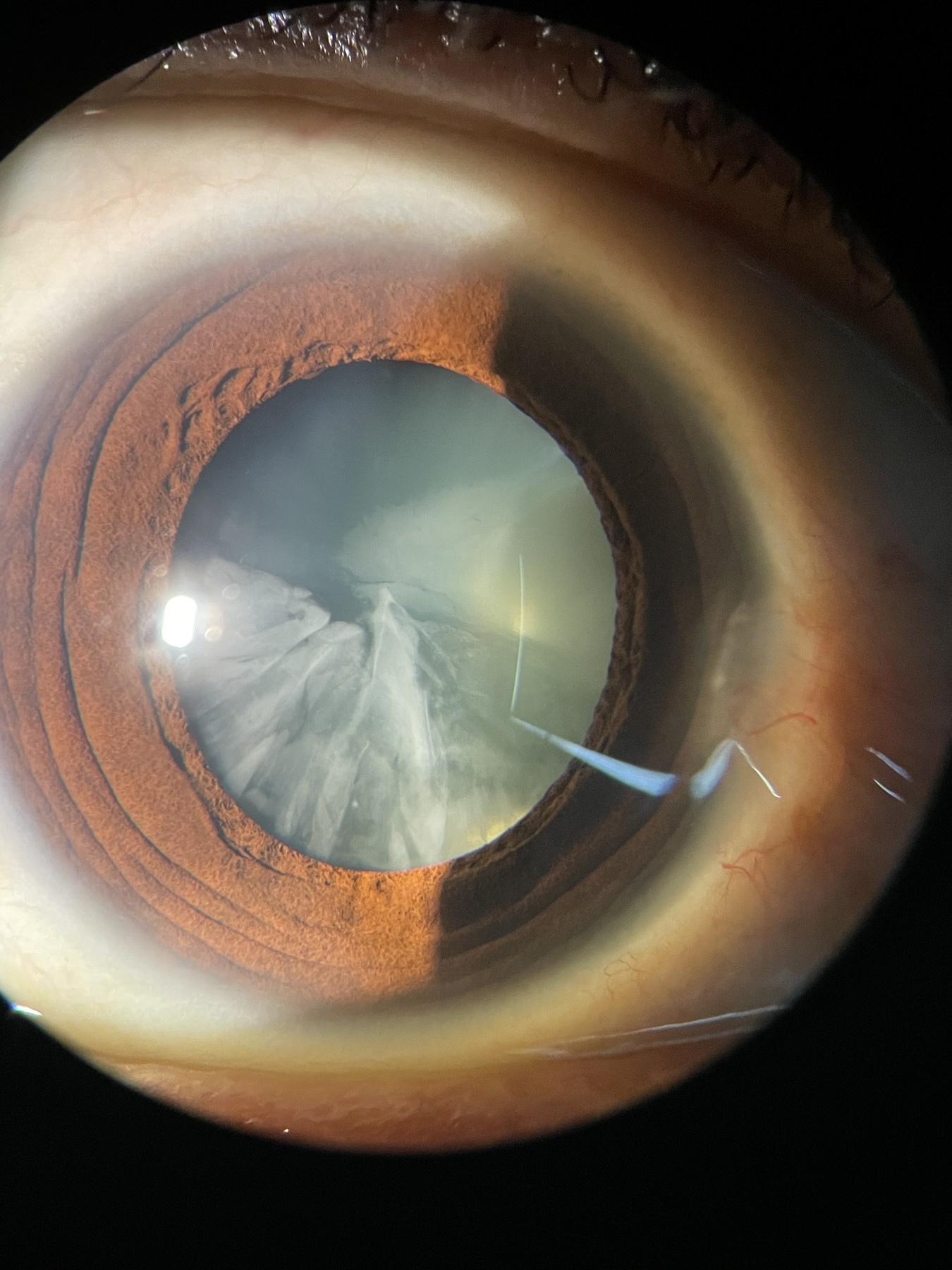
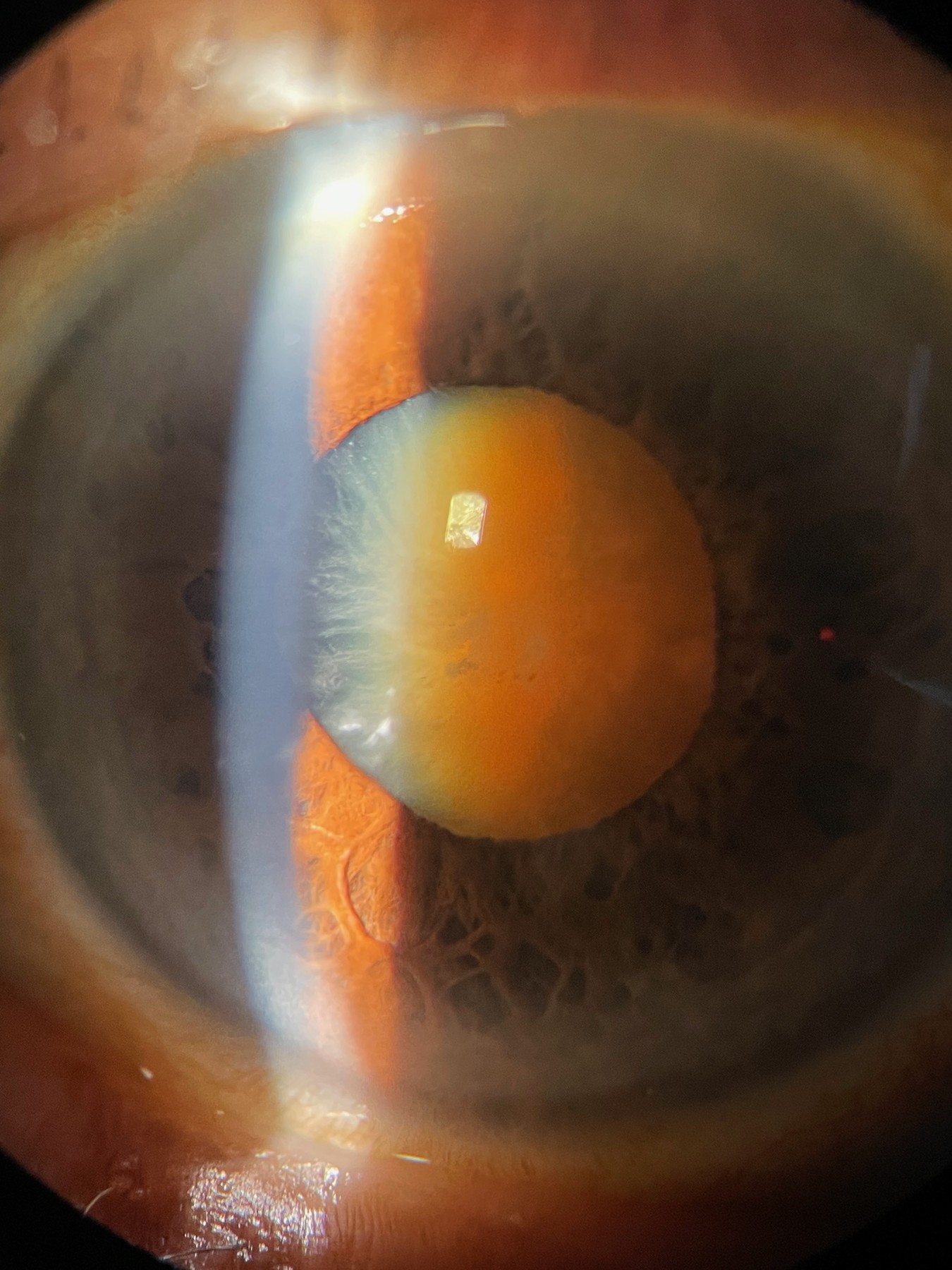
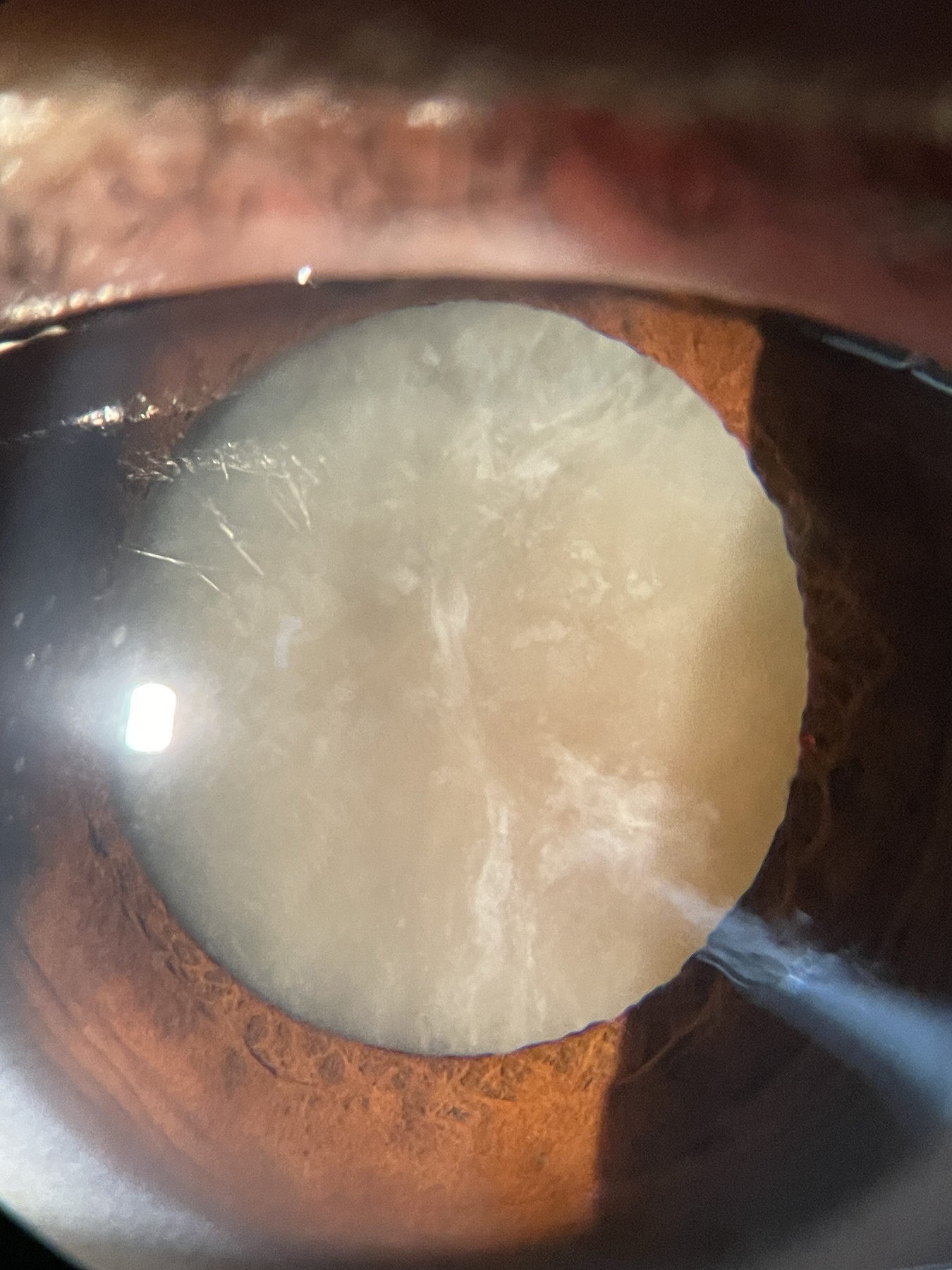
Real Vision Clinic® patient photos.
Nuclear cataract
Hardens and yellows the center of the lens; the most common type, directly tied to age.
Cortical cataract
Forms wedge-shaped opacities around the edge of the lens, like spokes advancing toward the center.
Posterior subcapsular cataract
Forms at the back of the lens; tends to progress faster and especially affects reading and vision in bright light.
Regardless of type or how advanced it is, the treatment is the same: cataract surgery. The type and density of your cataract help your surgeon plan the best technique for your case.