Corneal Crosslinking
A procedure that strengthens the cornea and halts keratoconus progression.
General description
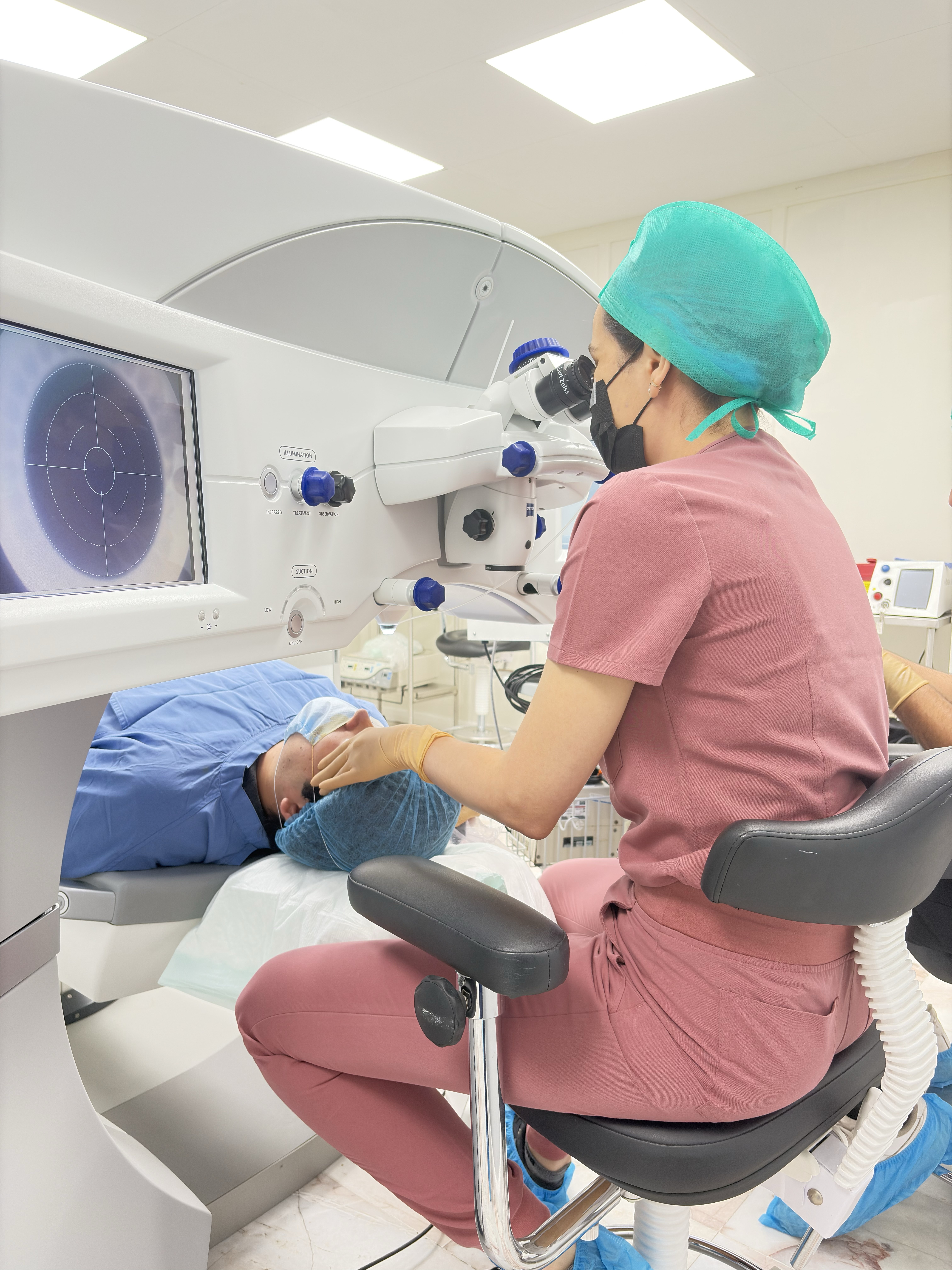
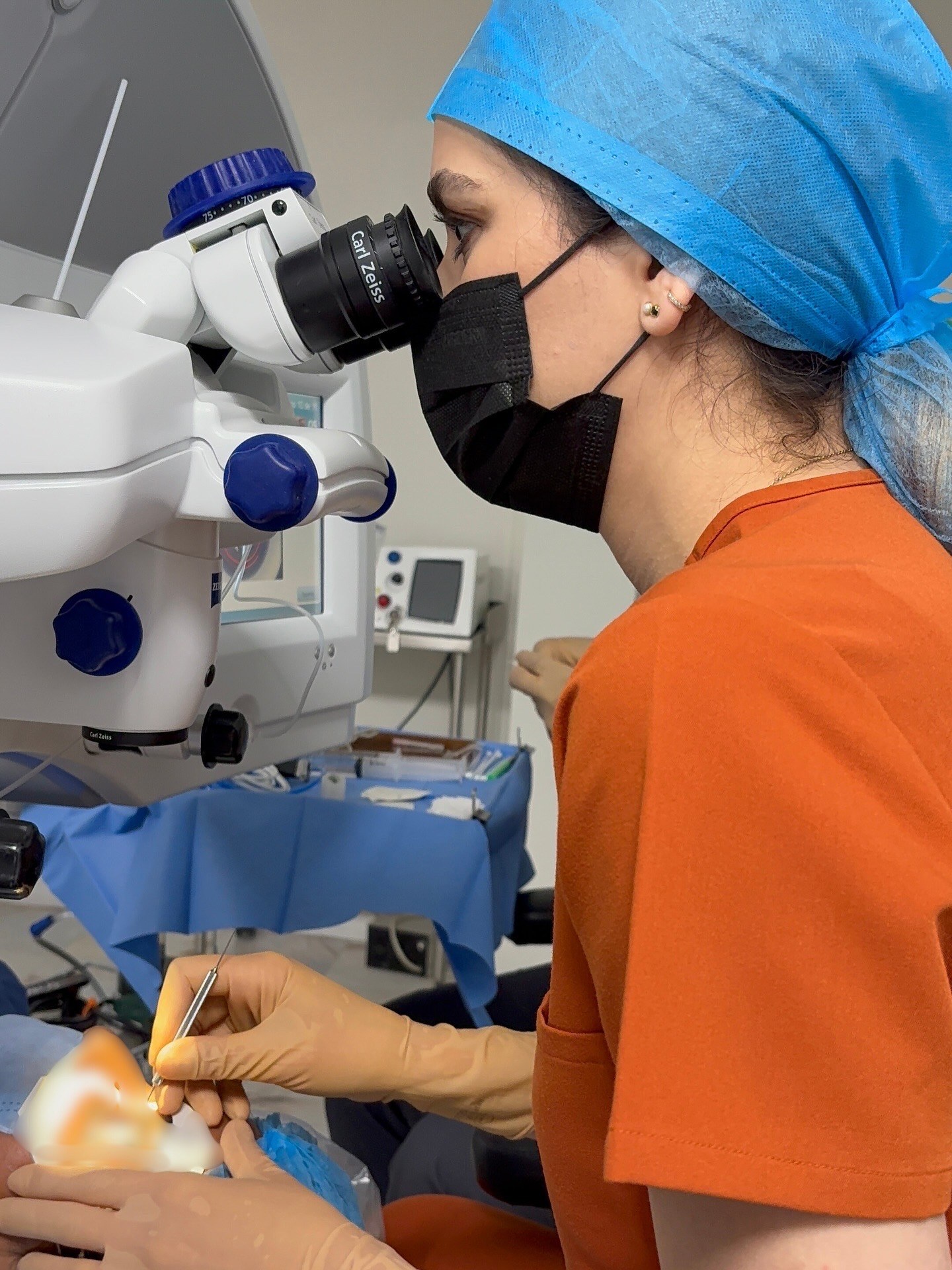
Corneal crosslinking uses riboflavin and controlled ultraviolet light to increase the rigidity of the cornea's collagen fibers, aiming to halt the progression of keratoconus and other corneal ectasias. Detected early, this procedure can help avoid the future need for a corneal transplant.
What does the surgery involve?
Riboflavin drops are applied to the cornea and then exposed to controlled ultraviolet light for several minutes, which increases the rigidity of the corneal collagen fibers. It's an outpatient procedure of about 30–60 minutes per eye, using only anesthetic drops.
Post-surgical care
A temporary bandage contact lens is placed to protect the cornea while the epithelium heals, and it's normal to feel discomfort, tearing, and light sensitivity in the first few days. Antibiotic and anti-inflammatory drops plus frequent lubricant are prescribed. We include, at no cost, the post-surgical kit with your starter treatment drops.
Post-surgical follow-up
Follow-up is essential to confirm that the keratoconus has stabilized, which is why it is always carried out by the same physician who performed your crosslinking. We include one month of follow-up consultations at no cost.
Other treatments
LASIK
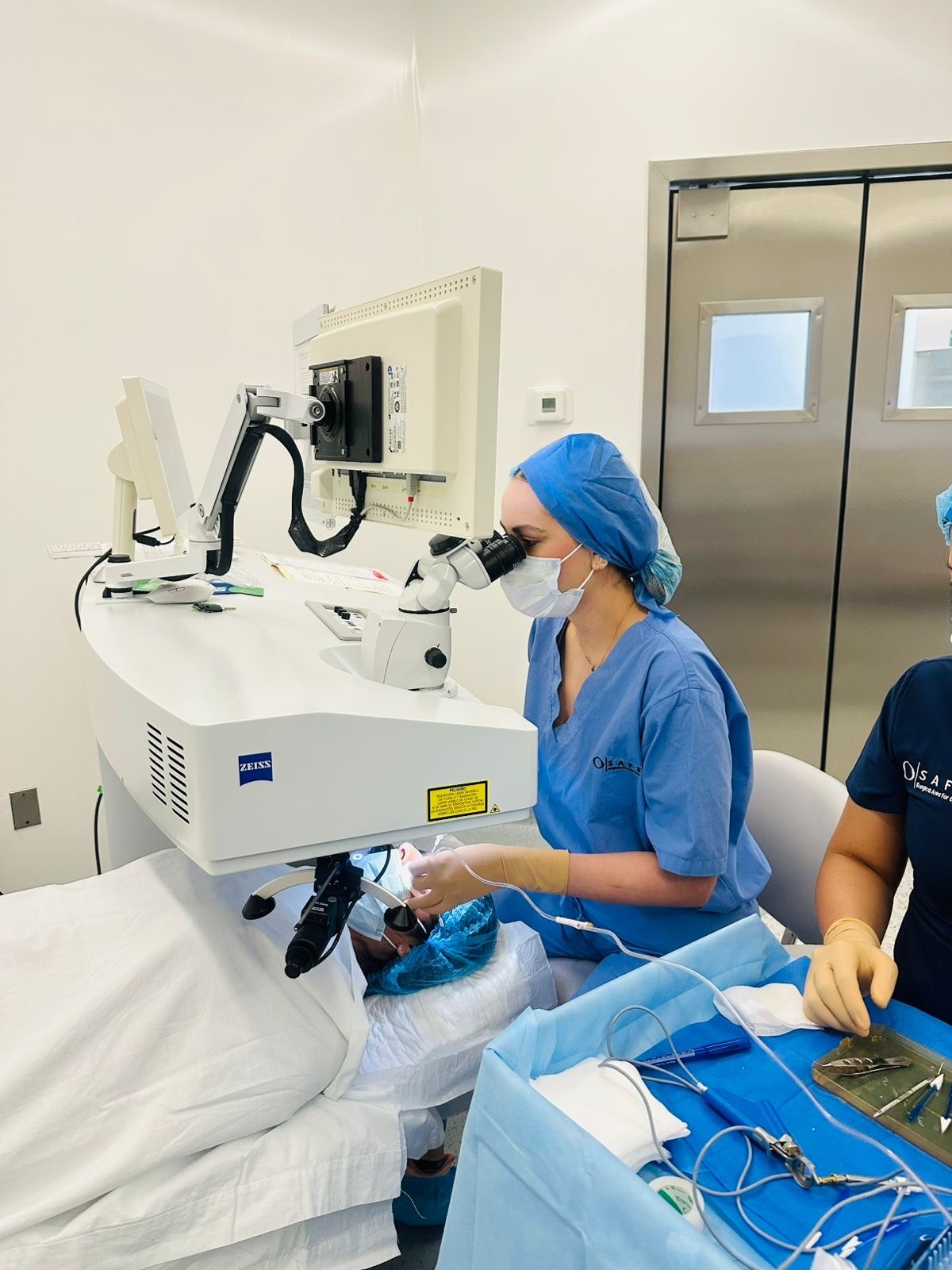
Laser refractive surgery to correct nearsightedness, farsightedness and astigmatism.
Learn more