Scleral Lens Fitting
Larger-diameter rigid contact lenses that vault over an irregular cornea to create a uniform optical surface — no surgery required.
General description
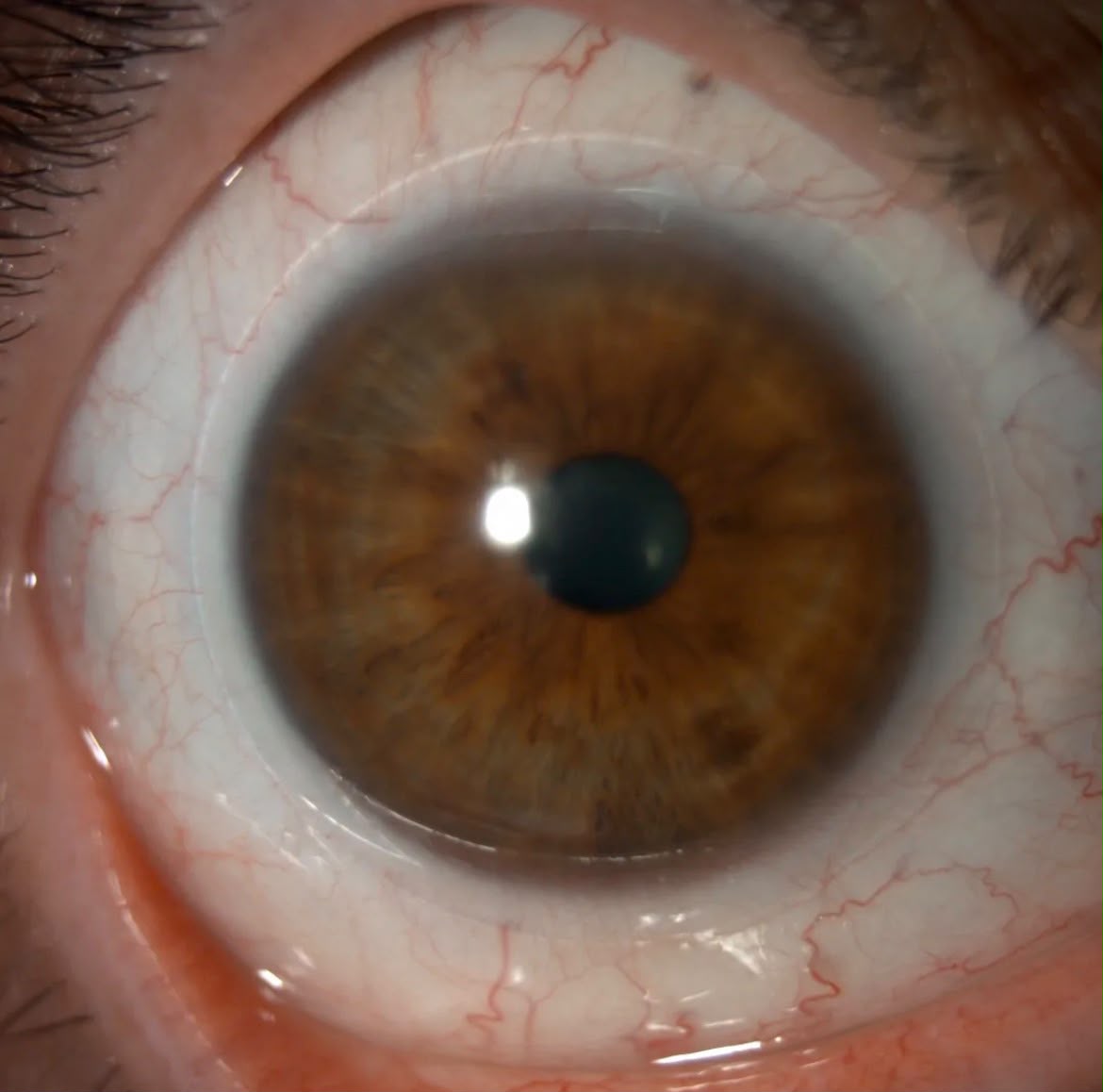
Scleral lenses are larger-diameter rigid contact lenses that rest on the sclera —the white part of the eye— without touching the cornea. The space between the lens and the cornea is filled with saline solution, creating a uniform optical surface even when the cornea has an irregular shape. They're the most effective non-surgical option to improve vision in keratoconus, irregular corneas after a corneal transplant or previous surgery, and cases of severe dry eye that haven't responded to other treatments, and they're usually better tolerated than conventional contact lenses.
What does the scleral contact lens fitting exam involve?
Caring for your lenses
- Don't sleep with your lenses in, unless your specialist tells you otherwise.
- Wear them a maximum of 10 to 16 hours a day, as indicated by your specialist.
- Always wash your hands with soap before handling them.
- Clean them every night with the recommended saline solution to remove deposits and prevent infections.
- Check them before inserting for any damage or scratches.
- Avoid pools, the ocean, or hot tubs while wearing them.
Follow-up
Fitting follow-up is carried out by the same Dr. Ned Davila Avila, our cornea specialist, with check-ins in the first few weeks to confirm the fit is comfortable and vision is optimal. If your underlying condition —such as keratoconus— is progressive, we provide ongoing follow-up with periodic topography scans to see whether the lens design needs adjusting.
Who's a candidate for scleral lenses?
They're worth considering if any of these apply to you:
You have diagnosed keratoconus and conventional contact lenses no longer give you good vision or are uncomfortable.
Your cornea became irregular after a corneal transplant or a previous surgery.
You have severe dry eye that hasn't improved with drops or other conventional treatments.
You've tried regular contact lenses and can't tolerate them, due to discomfort, poor vision, or both.
Corneal topography: the foundation for designing your lens
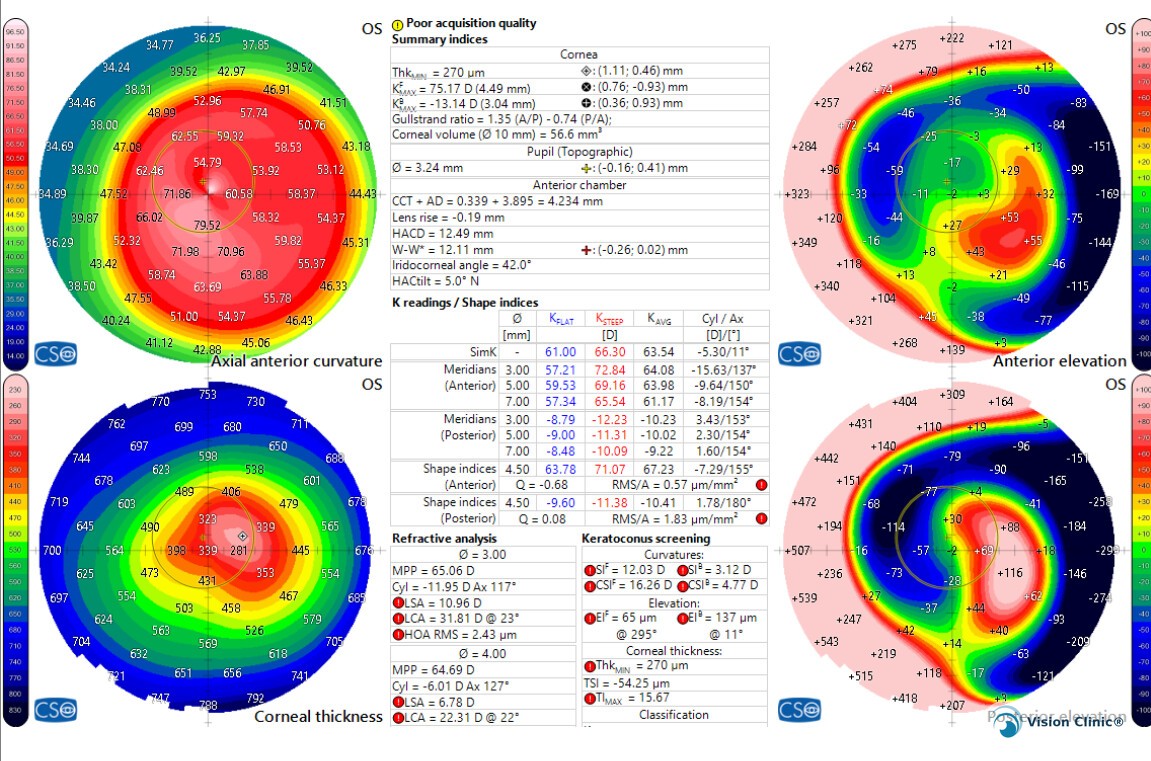
Scleral lens fitting starts with a corneal topography scan: it lets us see your cornea's exact curvature to design a lens that fits correctly and gives you the best possible vision. We perform it right here, with the Sirius Plus system, the same day as your consultation.
Frequently Asked Questions
Do scleral lenses hurt or feel uncomfortable?
No. Since they rest on the sclera and don't touch the cornea, most patients find them more comfortable than conventional contact lenses, especially if they have keratoconus or another corneal irregularity.
How many hours a day can they be worn?
It depends on each case, but most patients wear them through their regular day (10-16 hours) and remove them before sleeping, unless your specialist indicates otherwise.
Do scleral lenses work for keratoconus?
Yes. They're one of the most effective non-surgical options to improve vision in mild to moderate keratoconus, since they create a uniform optical surface over the irregular cornea. Learn more about our keratoconus treatment options.
Do I need a referral from another institution to get fitted for scleral lenses?
No. You can book your evaluation and corneal topography directly with us — no referral needed.
How long does the fitting process take?
It varies by case, but generally includes an initial consultation with topography and a diagnostic lens trial, followed by the manufacturing of your definitive lens (which can take a few weeks) and one or more fitting and training visits.
How long do scleral lenses last?
With proper care, a pair of scleral lenses can last up to 2 years before needing replacement.
Other treatments
Keratoconus
Early detection and comprehensive management of progressive corneal thinning.
Learn more
Corneal Crosslinking in Tijuana
A procedure that strengthens the cornea and halts keratoconus progression.
Learn more